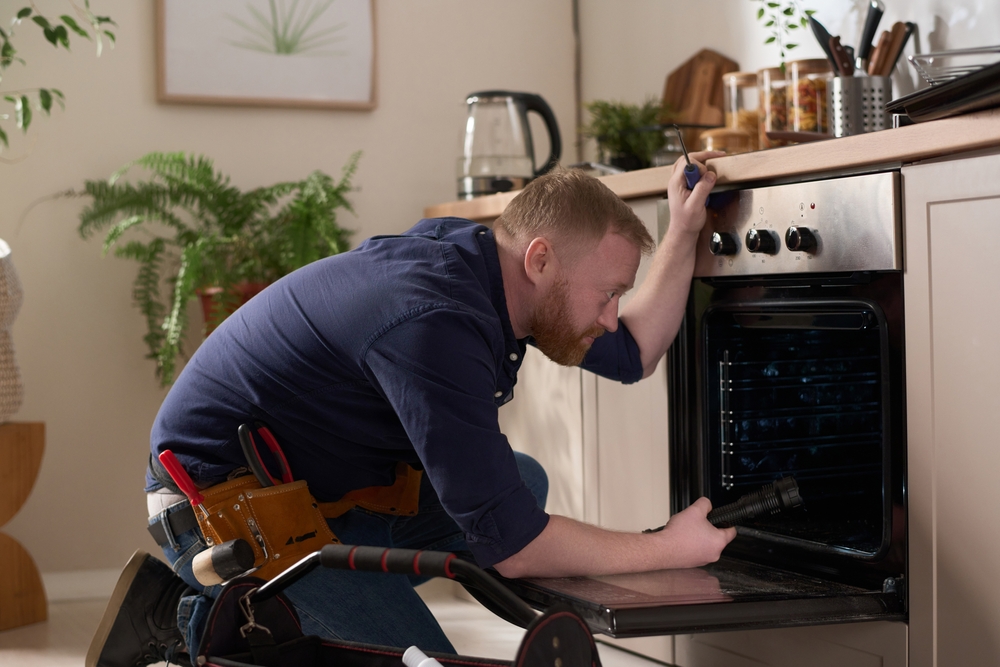
Oven issues don’t always show up as error codes or loud noises. Sometimes, the problem hides in plain sight—like a worn door gasket. It may not seem serious at first, but this one rubber seal has a big job. When it stops working properly, it affects everything from cooking times to overall efficiency. We see this often during appliance repair in Pasadena, especially with older units that still look fine on the outside.
What the Gasket Actually Does
Every oven door has a flexible rubber or silicone seal wrapped around the edge. This part is the gasket, and its job is simple but essential. It traps heat inside the oven cavity so the temperature remains steady. Without it, hot air leaks out and cool air sneaks in. As a result, the oven takes longer to reach the correct temperature, and the food cooks unevenly.
This gasket works like insulation. It keeps the heat where it’s needed—around your meal. Over time, though, constant exposure to heat, steam, and grime wears it out. Cracks, hard spots, or flattening all reduce the seal’s ability to stay tight. In that condition, even if the oven appears to work, it’s silently losing heat every minute it’s on.
Why Heat Loss Slows Cooking
Longer cooking times are one of the first signs of a bad gasket. That’s because heat is no longer sealed in properly. So, the oven compensates by cycling more often or running longer to maintain set temperatures. This extra strain also causes fluctuating internal heat, which leads to undercooked spots and strange results.
Slow cooking isn’t just frustrating—it can actually waste energy. When we respond to calls for oven repair Pasadena, we often find the heating element is working fine. The real culprit is the gasket leaking heat with every cycle. Replacing the seal fixes the issue without replacing expensive parts. It’s one of the simplest, most effective fixes for improving oven efficiency again.
Signs That Your Gasket is Failing
Not every gasket problem looks obvious. However, a few subtle clues help us pinpoint the issue. If you feel warm air escaping from the sides when the oven runs, that’s a strong sign. In other cases, burned edges or slightly open corners mean the seal is deformed or pulled loose. These gaps allow heat to spill out, even if the rest of the gasket looks fine.
Another common sign is more noticeable: if cooking times are off or dishes are unevenly baked, the door may not be sealing fully. Sometimes, the gasket even leaves dark marks on pans or hands if it’s become brittle. Before reaching for other solutions, check the door gasket for softness and shape. Even a small break in the seal can throw off the oven’s performance.
What Causes Gaskets to Wear Out
Heat is the biggest reason gaskets wear out. Over years of cooking, that constant high temperature slowly breaks down rubber. Additionally, cleaning sprays and oven cleaners often leave residue behind. These chemicals dry out the gasket or cause it to harden. If food spills near the seal, the residue builds up and turns sticky, preventing a tight close.
Time alone doesn’t always ruin a gasket. But careless habits like slamming the door or using it as a shelf can stress the corners. Repeated pressure bends or compresses the material unevenly. That weakens the seal around specific areas. We suggest a gentle close every time and regular checks for signs of flattening or hardening.
How to Check and Maintain the Gasket
We recommend checking the gasket at least once every three months. Use your fingers to gently run along the seal’s entire edge. Look for splits, burns, or areas that feel harder than others. Press in gently—if the gasket doesn’t bounce back, it may be too worn. On newer ovens, the gasket may be clipped or slotted in, making it easy to replace.
Cleaning helps extend its life. Use a damp cloth and mild soap to wipe grime or food debris. Avoid harsh cleaners or scrubbing pads. That is to say, simple upkeep can preserve flexibility and ensure the gasket seals tight for longer. If it feels sticky or rough, it’s time to consider replacing it before problems start.
When a Replacement Is the Only Fix
In some cases, a damaged gasket cannot be repaired. Once it loses shape, no amount of cleaning or adjusting will restore it. You’ll know it’s time to replace the gasket if you see sagging sections, visible tears, or heat loss even after cleaning. Fortunately, this is usually a quick fix for most oven models.
We treat this issue often during appliance repair in Pasadena, especially in homes with older ovens that still function in other ways. A new gasket brings the oven back to normal function, often reducing cooking times instantly. It’s a repair many homeowners overlook but one that changes everyday cooking results.
Gasket Damage Often Goes Overlooked
Some people go months without realizing their gasket is the reason meals aren’t cooking right. That’s because the oven still turns on, the lights work, and the element glows. However, the heat never stays in long enough to do its job. Many assume the problem is deeper and end up replacing parts that are still fine.
It’s important to remember that heat loss impacts more than just cook time. It also affects temperature accuracy and can lead to premature damage to internal components. The oven runs longer, burns more power, and can dry out the circuit board over time. A bad gasket invites more serious issues if left unresolved.
Common Oven Models That Use Clip-in Gaskets
Clip-in gaskets make replacement easier. These seals fit into pre-set grooves or hooks without adhesive. That means you can remove them with gentle pulling and fit a new one in place. Most modern ovens use this style. We see these in a variety of home units during service calls for oven repair Pasadena, and the process is quick.
Screw-in or glued gaskets are more common in older ovens. These take more time to replace and sometimes require removing the door. If you’re unsure which type your oven uses, look along the door edge. Clip-in gaskets will move slightly if tugged, while glued types feel firmly attached with no give.
Cooking Issues Caused by a Worn Gasket
Leaky gaskets do more than delay dinner. They can cause some foods to dry out while others stay raw in the center. Heat escaping from one side creates uneven air flow, so you end up rotating trays and guessing cook times. For baked goods, that change in humidity ruins texture. Breads don’t rise right. Cakes sink. Cookies burn on one edge.
We’ve also seen this affect broiling. In ovens with bad seals, the broil setting struggles to hold temperature near the top rack. That’s because the heat slips out faster than the element can supply it. Fixing the seal brings those functions back to balance and saves time spent checking and rechecking dishes mid-cook.
When To Call for Help
If you’ve cleaned the gasket and cooking is still slow or uneven, it may be time for a closer look. Signs like warped seal shape, cracked rubber, or visible burns mean the material can no longer hold heat. Don’t wait until other parts are damaged. Instead, get it replaced quickly by professionals who know what to check.
To schedule a proper inspection or ask about oven gasket repair, reach out to Quick & Pro Appliance Repair Pasadena and speak with someone on our team today. It’s a small fix that prevents bigger issues and saves you from unnecessary replacements later.
FAQ
What does a worn oven gasket look like?
A worn gasket may look flat, cracked, or discolored. It might have burns or gaps where it no longer meets the door frame fully.
Can I still use the oven with a damaged gasket?
Yes, but you’ll likely face longer cook times, uneven heat, and higher energy bills. Food may also cook unevenly or burn in spots.
How long do oven gaskets usually last?
Most gaskets last five to ten years, depending on use. High heat, frequent cleaning, and door slamming can shorten that time.
Do I need a professional to replace the gasket?
Some models have easy clip-in gaskets, but glued or screw-in types may need professional tools and skill to avoid damage.
Why does the oven stay warm after turning off?
If the gasket is leaking, warm air may escape slowly, making it feel like the oven is hot longer than usual. That’s a sign of poor insulation.