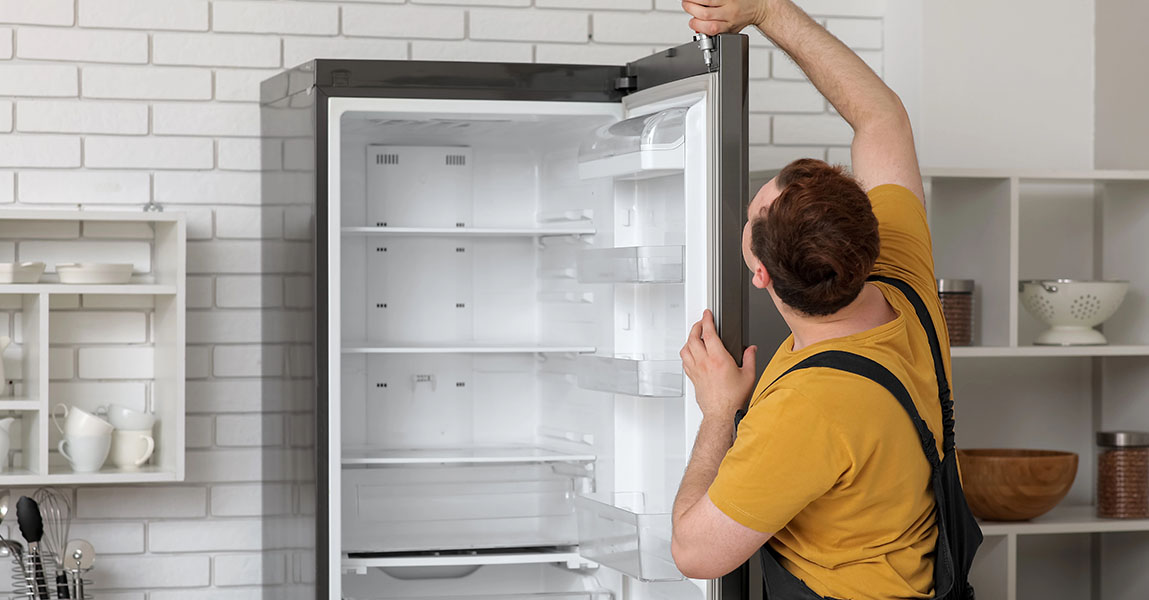
If fridge fan noise shows up for a few minutes and then disappears, it usually points to a normal cycle or a small condition that is starting to build. Therefore, catching the pattern early can help you avoid spoiled food, warmer temps, and surprise breakdowns.
In many Pasadena homes, the sound people notice is a low hum, a soft whir, or a quick rattling that fades away on its own. However, the reason it comes and goes depends on which fan is making the sound and what is happening inside the refrigerator at that moment.
Why the noise happens in cycles
Refrigerators run in stages, not in one constant mode. Firstly, the compressor may turn on, then the fans spin up, and after that the unit rests when the temperature target is reached. As a result, a fan noise that appears only during cooling can be completely normal.
That said, “normal” sounds are usually smooth and steady. On the other hand, clicking, scraping, chirping, or a loud wobble often means something is rubbing, loose, or slightly out of alignment.
Fridge fan noise from the freezer side
Most modern fridges use an evaporator fan in the freezer section to move cold air through the coils and into the fresh food compartment. Therefore, you may hear the sound more clearly when you open the freezer door, or when the unit is actively cooling after the door was opened.
Ice buildup brushing the fan blades
A very common cause is frost or ice contacting the fan blades. For example, a small ice ridge can form near the fan shroud, and the blades will tap it until the defrost cycle changes the shape or the ice breaks off. In other words, the noise may “fix itself” for a while, then return when the frost builds again.
If you notice thicker frost on the freezer back panel, the real issue may be airflow restriction or a defrost problem. Consequently, it is smart to book a proper check before the fan motor gets strained. When you need help, Quick & Pro Appliance Repair Pasadena can handle the diagnosis through our fridge repair Pasadena service.
A worn fan motor that settles after it warms up
Fan motors can develop worn bearings. Meanwhile, the motor may squeal or grind at startup, then quiet down as it warms and spins more smoothly. This is one of those “comes and goes” patterns that gradually becomes more frequent.
Fridge fan noise from the back or bottom
Another fan that may be involved is the condenser fan, usually located near the compressor at the back or bottom. However, this fan is also affected by dust, pet hair, and anything that falls behind the unit.
Dust and debris causing a temporary rattle
Lint can stick to the blades and throw off balance. Therefore, the fan may rattle only at certain speeds, then sound normal as the speed changes. Likewise, a small piece of plastic or cardboard can vibrate against the fan housing and stop when the unit cycles off.
If the area around the compressor is hard to access or you suspect the fan is hitting something, it is safer to have a technician check it. To clarify, the goal is to avoid damaging wiring, blades, or the motor bracket.
When the sound is linked to doors and airflow
Sometimes the “fan noise” is actually airflow resonance or a part reacting to pressure changes.
The fridge makes noise right after you close the door
When you close the door, air pressure changes inside the compartments. Consequently, you might hear a brief whoosh, a flutter, or a hum that fades. This can be normal, but if it becomes a loud vibration, a loose cover, vent, or damper can be the cause.
If the fridge struggles to cool evenly, this may show up as fan speed changes and repeated cycling. In addition, overloaded shelves can block vents and force the fan to work harder.
Simple checks you can do without tools
You do not need to take anything apart to learn a lot from the sound. Firstly, listen for where it is loudest: freezer, fresh food, or back bottom area. After that, note when it happens: right after door openings, during heavy use, or mostly at night when the home is quiet.
Try these safe checks:
- Make sure the fridge is level and not touching a cabinet wall. Therefore, vibration will not amplify through wood.
- Confirm food packages are not pressed against rear vents. In other words, leave small gaps for airflow.
- If you have a water/ice maker, check for a slow drip that creates frost patterns. However, do not force panels off.
If you want a fast service option in Pasadena, Quick & Pro Appliance Repair Pasadena can coordinate a visit through appliance repair Pasadena and narrow down whether the sound is cycling-related or a part starting to fail.
How we approach diagnosis in Pasadena homes
When we inspect a fridge with intermittent fan noise, we focus on the system, not guesses. Firstly, we confirm temperatures, airflow strength, and defrost timing. Moreover, we inspect fan mounts, shrouds, and any signs of rubbing, icing, or vibration marks.
If the fridge issue is part of a bigger kitchen or laundry routine problem, we can also support other appliances during the same season. For instance, if humidity or airflow in the home is affecting multiple machines, our dishwasher repair Pasadena and dryer repair Pasadena services help keep the whole setup running smoothly. Likewise, if cooking appliance performance is also acting up, stove repair Pasadena can address heating and control issues that often show up at the same time as other household wear.
When to stop waiting and schedule service
A noise that comes and goes is not always urgent. However, you should schedule help if any of these happen:
- The sound becomes louder or lasts longer each week.
- Cooling becomes uneven, or food spoils faster.
- Frost returns quickly after you clear it, or the freezer panel looks bulged with ice.
- The noise turns into scraping, metal-on-plastic rubbing, or repeated squealing.
Most importantly, fridge fan noise that changes over time is your early warning signal. Therefore, dealing with it early usually costs less than waiting for a motor, control, or defrost failure to create a bigger repair.
FAQs
Why does my fridge fan noise stop when I open the freezer door?
Many models pause the evaporator fan when the door opens. Therefore, the noise can stop instantly even if the underlying cause is still there.
Can ice buildup really make a fan sound come and go?
Yes. For example, frost can touch the blades during certain cycles, then shift or melt slightly during defrost, so the sound seems random.
Is a short humming noise after the door closes normal?
Often it is. However, if it turns into a strong vibration or repeated rattling, a loose vent cover or airflow issue may be involved.
Will cleaning behind the fridge help intermittent fan noise?
It can. Dust and pet hair can unbalance the condenser fan, so cleaning may reduce rattling, but it will not fix worn bearings or damaged blades.
When should I call a technician for an on and off fan noise?
Call when the noise gets louder, cooling becomes inconsistent, or frost returns quickly. Consequently, early diagnosis helps prevent motor strain and bigger breakdowns.