Quick & Pro Appliance Repair Pasadena helps local homeowners know when oven repair Pasadena service makes more sense than another DIY fix. Ovens rarely fail all at once. Instead, they show small signs first, like uneven baking, slow preheating, or a door that will not seal. Waiting too long on these signs usually means more strain on other parts. This guide covers the common warning signs, the likely causes, and when it is time to call a certified technician for oven repair Pasadena homeowners can rely on.
Signs Your Oven Needs Professional Repair
Uneven baking is one of the clearest signals something is wrong inside an oven. Cookies that brown on one side and stay pale on the other point to a heating or airflow problem. Preheating that takes far longer than it used to is another common sign. A temperature that swings during a bake cycle can ruin recipes that depend on steady heat.
A door that does not close fully lets heat escape throughout the cook. This forces the oven to work harder just to hold temperature. An interior light that stays on even after the door shuts usually means a door switch has failed. Any burning smell not related to food should prompt an immediate shutoff and inspection. Unusual sparking or a tripped breaker while the oven runs is another signal that calls for an immediate stop rather than continued use.
Why Ovens Develop These Problems
Heating elements weaken gradually with years of daily use. A dim or unevenly glowing element often struggles to maintain accurate temperature. Our detailed look at why baking times feel off walks through how this shows up in everyday cooking results.
Door seals and gaskets wear out from constant opening and closing. Once a seal loses its shape, heat escapes steadily during every bake. This connects closely to why oven temperature drops mid-cook in many older units.
Thermostats and sensors can also drift out of calibration over time. That drift throws off the whole temperature reading even when the heating element itself works fine. In many cases, homeowners assume a recipe is the problem when the real cause is a sensor reading several degrees off target.
Oven Symptoms and What They Mean
The table below covers the oven issues our technicians see most often. It also lists the usual cause and how we fix each one.
| Symptom | Likely Cause | What We Do |
|---|---|---|
| Uneven baking results | Weak or unevenly heating element | Test the element and replace it if output is inconsistent |
| Slow or inaccurate preheating | Miscalibrated thermostat or sensor | Recalibrate or replace the temperature sensor |
| Door will not close fully | Worn door seal, gasket, or hinge | Inspect and replace the seal, gasket, or hinge assembly |
| Interior light stays on constantly | Failed door switch | Test and replace the door switch |
| Burning smell unrelated to food | Wiring issue or debris near the element | Inspect wiring and clear debris safely |
Homeowners dealing with a door that will not latch properly may also want our notes on a door that will not close fully during use. Hinge and seal wear share many of the same root causes.
How Our Technicians Diagnose Oven Problems
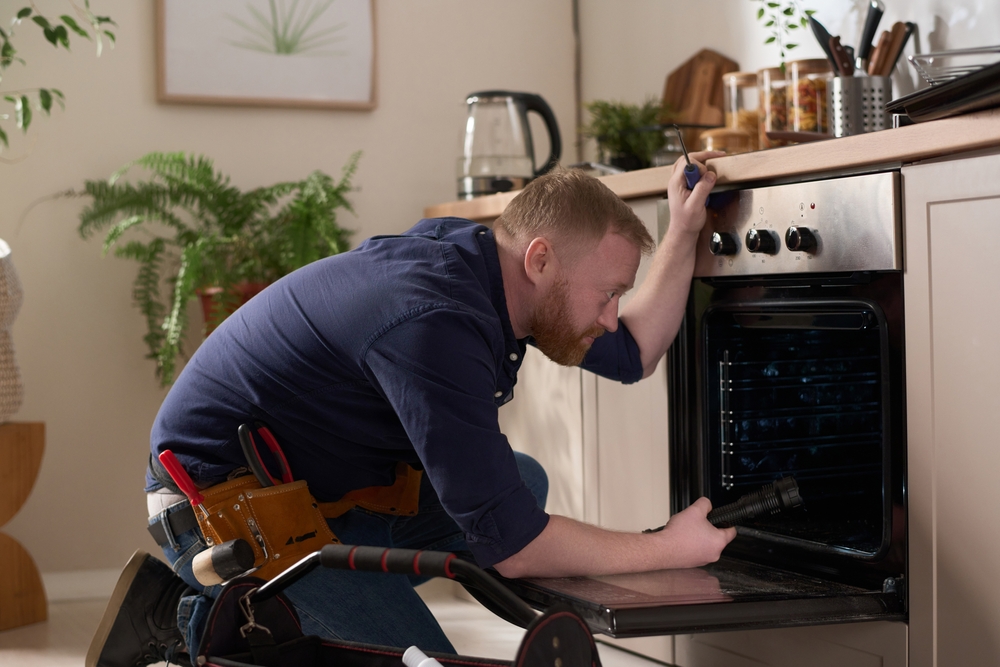
We start every oven repair Pasadena visit by testing actual temperature against the dial setting. This step alone catches many calibration issues quickly. From there, our technicians inspect the heating elements. They check for even glow and correct resistance under load.
Door seals and hinges get a close visual and physical check next. A seal that looks fine can still let heat escape if it has lost its shape. We also test electrical components like door switches and control boards. A single failed part can throw off the entire cooking cycle.
Reliable oven temperature matters for food safety, not just cooking results. The USFA’s home fire prevention resources list kitchen equipment as an area worth regular attention. We treat every oven repair visit with that same standard in mind, checking safety items alongside performance issues.
Simple Habits That Prevent Bigger Repairs
A few routine checks help homeowners catch oven problems before they grow into bigger repairs. None of these take more than a few minutes to perform.
- Check that the door seal makes full contact around the entire frame
- Use an oven thermometer occasionally to confirm the dial reading is accurate
- Clean spills promptly so debris does not build up near heating elements
- Watch for smoke or smells that are not related to what is cooking
- Schedule a checkup if baking results feel inconsistent over several uses
Households that cook often tend to notice these warning signs earliest, simply because they use the oven more frequently. Catching a problem within the first few uses usually means a simpler, faster repair. Waiting until a full bake is ruined or a smell fills the kitchen usually points to a problem that has already spread to a second component.
When DIY Fixes Are Not Enough
Wiping down a seal or replacing a light bulb is safe for most homeowners to try. Once the issue involves wiring, a heating element, or a control board, stop troubleshooting alone. These repairs involve real electrical risk.
Our team also supports households managing stove and cooktop repairs at the same time. Many ranges combine an oven and a stovetop in one unit, so a single visit can often address both.
Cleaning heating elements and inspecting door seals help, but persistent oven problems demand professional attention. Failed heating elements, faulty thermostats, broken door latches, cracked gaskets, and control board malfunctions all require expert diagnosis and repair. Our technicians at Quick & Pro quickly identify which component is causing temperature control, heating, or door seal issues and restore reliable, safe baking performance. When you need oven repair in Pasadena, we arrive same-day with diagnostic tools and OEM parts to restore accurate temperature and consistent cooking results without the guesswork.
Frequently Asked Questions
Why does my oven take so much longer to preheat than it used to?
Slow preheating usually points to a weakening heating element or a sensor that no longer reads temperature accurately. Both issues tend to worsen over time. Scheduling service early can prevent a full element failure.
Is it safe to keep using my oven if baking results are just slightly uneven?
Light unevenness is common in older ovens, but it often signals a heating element or airflow issue worth checking. Continuing to use the oven is generally safe short term. The problem rarely improves on its own, though.
Can a worn door seal really affect cooking results?
Yes, a worn seal lets heat escape steadily throughout the cook. That forces the oven to work harder and can throw off timing. Replacing a seal is usually a straightforward fix once diagnosed correctly.
Do you work on both gas and electric ovens?
Yes, our certified technicians service gas, electric, and dual-fuel ovens across the major brands found in Pasadena homes. We test each component individually before recommending a repair, and we explain what we find in plain terms before any work begins.
How quickly can I get an oven repair Pasadena appointment?
We schedule most oven repair Pasadena visits within a day or two of the initial call, depending on current demand. Our team will confirm the earliest available slot when you reach out, and same-day visits are often available for urgent safety issues like sparking or burning smells.
Contact Quick & Pro Appliance Repair Pasadena
Quick & Pro Appliance Repair Pasadena is available daily from 7:00 am to 8:00 pm. Call (818) 860-8028 to book a certified technician for oven repair Pasadena scheduling.